How to document a property loss for insurance
When you're determining scope after a loss, the record has to hold up. Not just at submission, but throughout the life of the claim. That means documenting the entire area of concern with a proof of loss that itemizes the suspected cause and every subsequent damage.
To document a loss completely, you need:
- Photos to establish visible conditions
- A 3D virtual tour so anyone reviewing the claim can walk the space remotely
- A schematic floor plan with accurate measurements to support scope and cost calculations
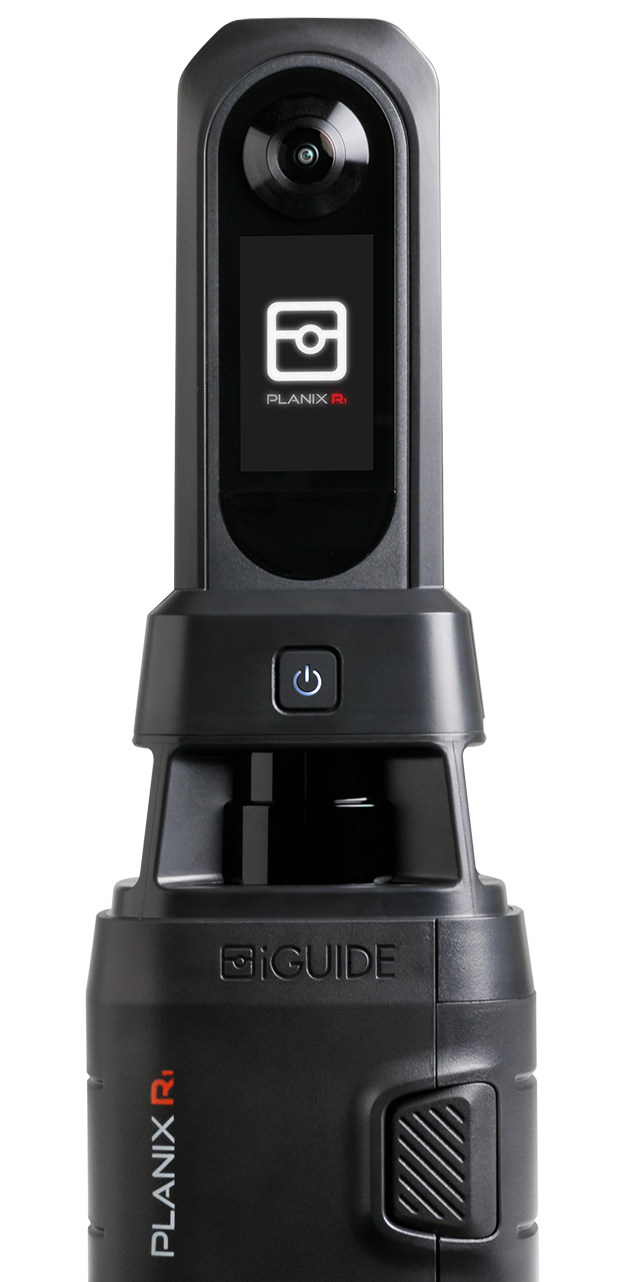
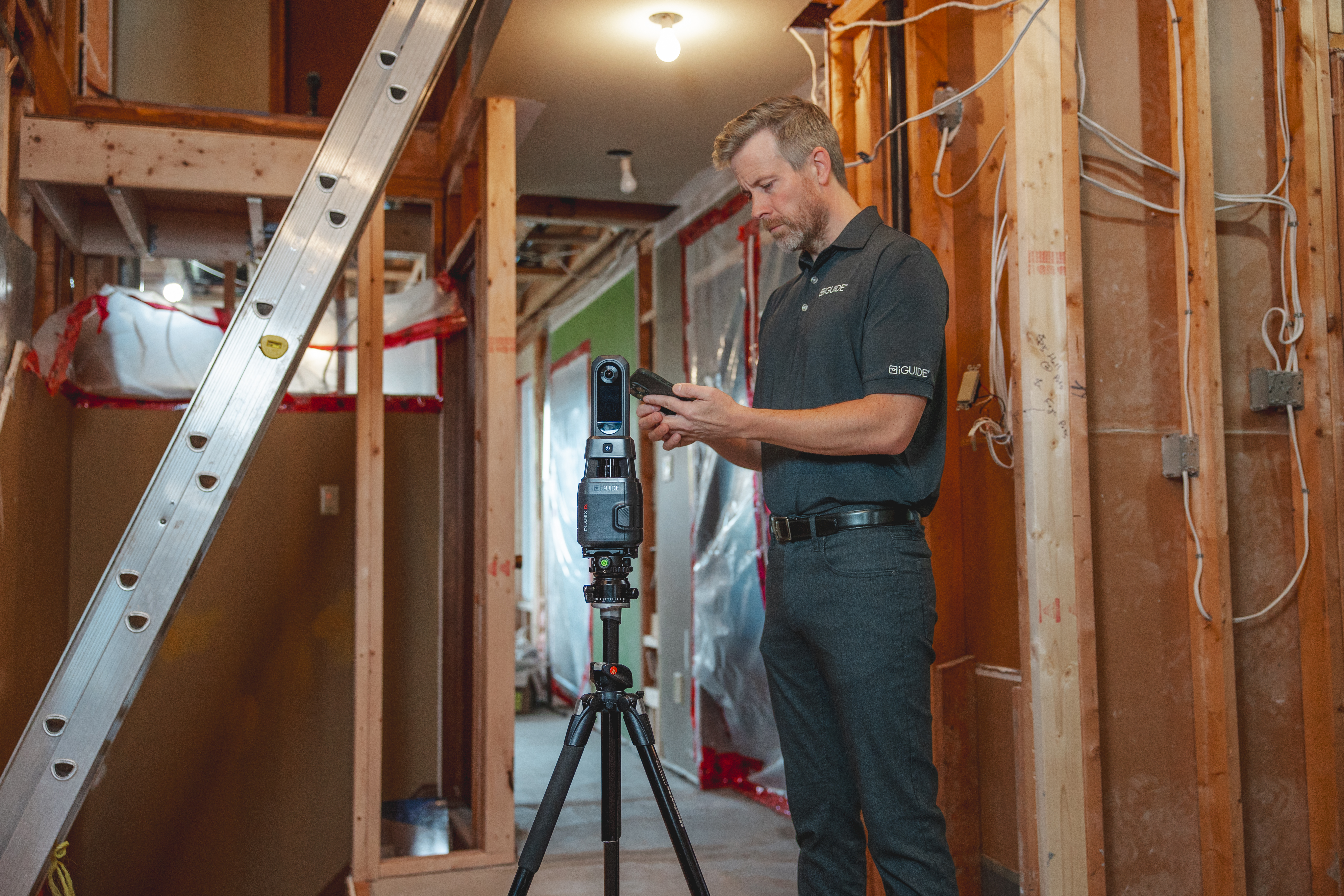
iGUIDE captures all three in a single visit. An average 2,500 sq ft property takes around 15 minutes, which means you can process more claims in a day without sacrificing the quality of the record.
How to mark damage locations on a floor plan
A pin on a floor plan without context creates work for everyone downstream. The adjuster has to cross-reference notes, the restoration PM has to match numbers to descriptions and something always gets misread.
Enhanced Tags fix that. During capture, you place color-coded icons directly on the 2D floor plan: a drain icon at the source point, a thermal marker where the moisture meter spiked, an electrical tag at the compromised panel. Each icon comes from a curated library grouped by Utilities, Safety & Conditions, Media and Spaces.
The meaning is immediate. The adjuster, the restoration PM and the downstream contractor all read the same record without a phone call to clarify what a pin meant.
How to protect yourself when a claim gets disputed
Your quote is only as defensible as the data behind it. If the measurements are wrong or the scope is unclear, you're back on site before the job has started.
iGUIDE floor plans are built on LiDAR accurate measurements (0.5 percent or less typical distance measurement uncertainty). You can share the complete file with multiple subcontractors directly from site. Before you have left the driveway, your sub has the floor plan, the photos and the measurements they need to quote accurately.
The capture connects directly to your estimating software. Once the scan is complete, iGUIDE generates an ESX file that imports into Xactimate in minutes. No manual sketching, no re-entering measurements. The floor plan you captured on site is the one your estimator works from.
Key outcomes for restoration documentation:
- Quote accurately the first time. No return visit to re-measure.
- Faster decisions. A complete record from one visit means less back-and-forth before work begins.
- Verified data for reconstruction costs. Calculate replacement figures from measurements you can stand behind.
How to scope a restoration job without going back to site
Hand-drawn sketches and a handful of photos leave gaps. Manual measurements introduce discrepancies that require return visits to correct. That is extra time and cost that falls on everyone involved.
With iGUIDE, the record includes visual and factual proof of existing conditions. Data captured on site cannot be altered after the fact. That gives the adjuster, the contractor and the insurer a defensible record — one that reduces exposure to disputed claims without requiring anyone to take it on faith.
How to get claims closed faster
The insurance industry runs on cycle time. You get paid when the job closes. A thin record slows everything down: questions go back to the adjuster, the adjuster needs another visit, the claim sits open.
When the iGUIDE file is complete, questions get answered from the record. The data supports resolution without a follow-up call or a second trip to site.
Flood Out Restoration in Longview, Texas scans every project from the moment equipment is set up. Adjusters and consultants receive the virtual walkthrough link and ESX file before they arrive on site. On one water loss, a team that expected to need two days on site finished in one. Claims that previously took months now close in weeks or days. As owner Wes Markum puts it:
"Insurance companies don't pay us just to do the work. They pay us for documentation."
The Greenspan Co. in San Francisco handles catastrophic losses at scale. During the recent LA wildfires, their documentation turnaround held at 24 to 36 hours while other tools stretched to 11 days for ESX files. Both companies document every project the same way, whether or not it becomes a claim. The record is there before anyone asks for it.
Losses happen. The question is how quickly the record supports getting everyone paid. One visit, accurate measurements, tagged assets and a complete 3D walkthrough. The evidence speaks for itself.
Book a demo to see iGUIDE documented on a real loss scenario.