Why trust has always mattered in real estate listings
Before AI entered the picture, trust was already central to how buyers evaluate properties.
Most buyers form their first impression of a home online. Listing photos, floor plans and virtual tours often determine whether a property is worth exploring further.
Because of that:
- buyers rely heavily on listing media before booking a showing
- listing media shapes how a home is perceived
- credibility influences whether buyers move forward
When listing content feels accurate and complete, buyers engage with more confidence. When it doesn’t, trust breaks down quickly.
How AI is changing real estate marketing and listing content
AI is making it easier to create, edit and enhance listing media. Agents and real estate media teams have access to tools that can:
- enhance lighting and remove imperfections in photos
- generate or modify visual elements
- automate editing workflows
- speed up content production
These tools can improve efficiency and presentation. But they also introduce a new challenge.
As visuals become easier to alter, buyers become more sensitive to whether what they’re seeing reflects reality. In response, real estate organizations and Multiple Listing Services (MLS) are starting to introduce stricter guidelines around how properties are represented—emphasizing “true picture” depictions of a home.
Technology is evolving but expectations around honesty haven’t changed.
What accurate real estate listings actually mean
Accurate real estate listings refer to property visuals and information that reflect a home’s true layout, scale and condition.
This includes listing photography, virtual tours and floor plans that document a property rather than alter it.
In practice, authenticity means:
- accurate representation of layout and flow
- clear spatial relationships between rooms
- reliable measurements
- visuals that document rather than embellish
The goal is simple: help buyers understand how a home actually looks and functions before they visit.
This kind of clarity isn’t just helpful for buyers—it also makes content easier for search engines and AI systems to interpret and trust.
Where real listing media can lose buyer trust
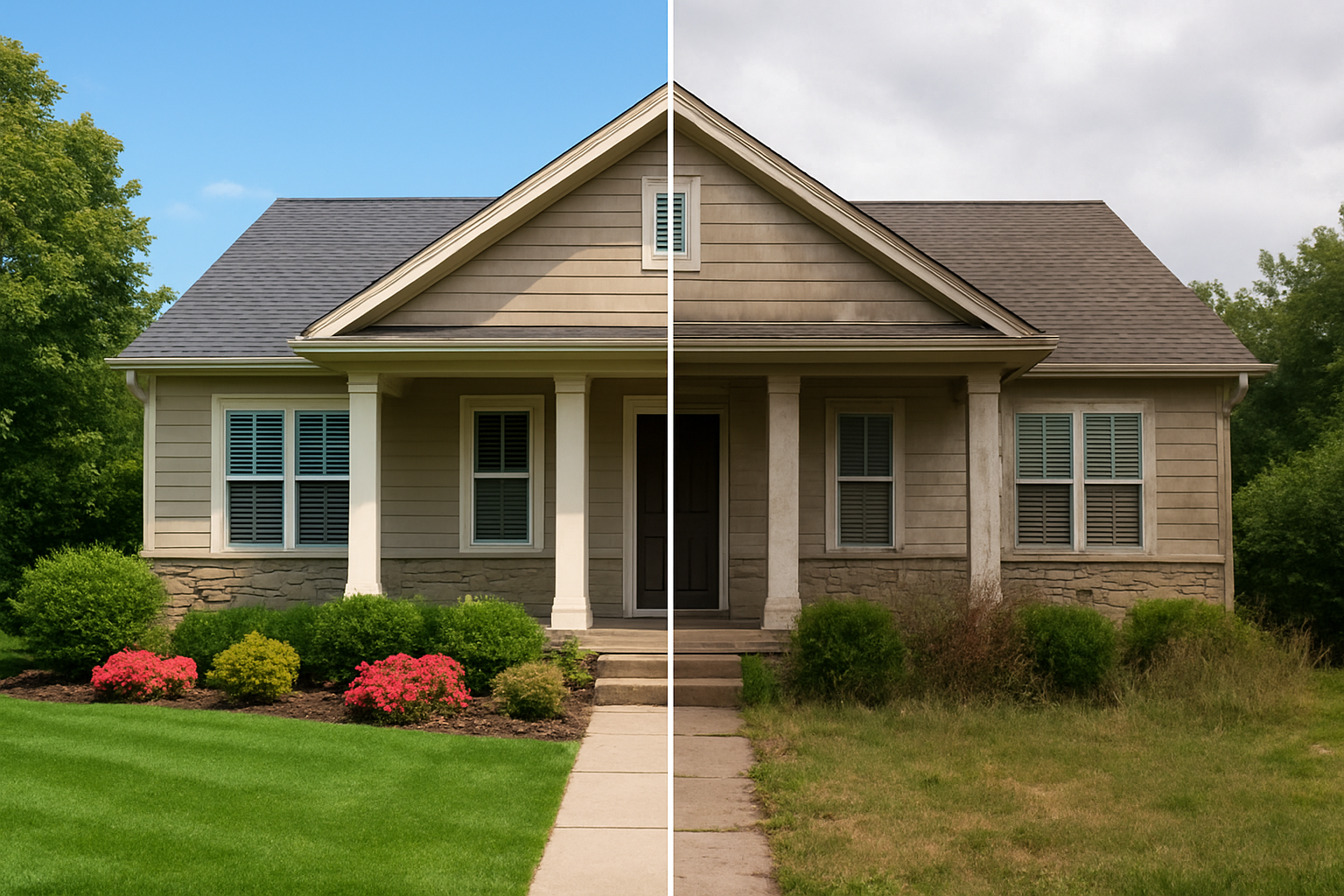
Buyers don’t expect perfection—but they do expect honesty.
Trust starts to break down when listing media feels misleading or incomplete. Common examples include:
- heavily edited photos that distort lighting or condition
- images that avoid showing layout limitations
- inaccurate or missing floor plans
- visuals that exaggerate space or proportions
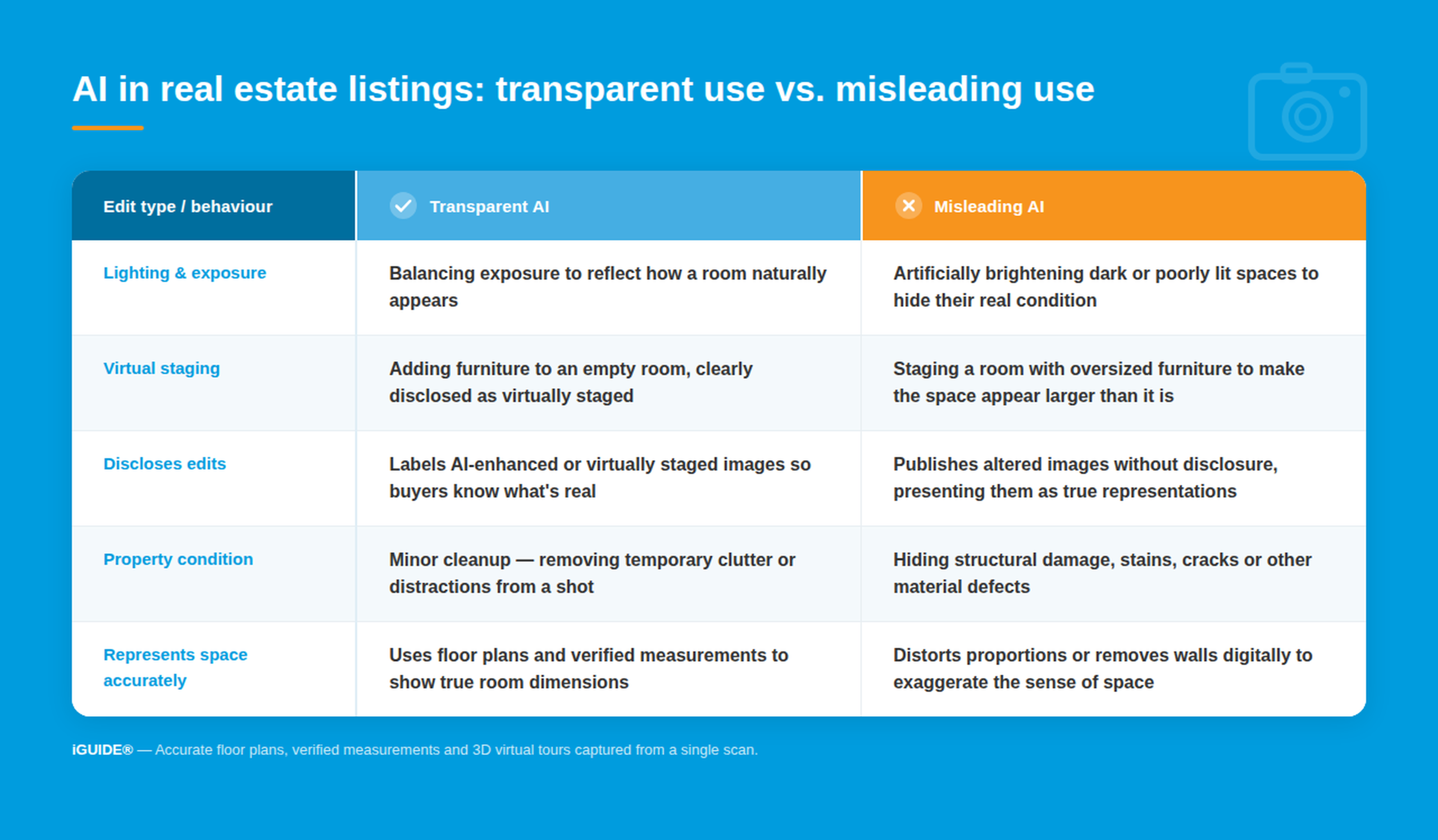
In some cases, AI tools are used in ways that go beyond simple enhancement such as hiding property damage, altering lighting conditions or virtually staging spaces in ways that don’t reflect real dimensions.
When this happens:
- buyers feel misled
- showings become less productive
- agent credibility takes a hit
In a market where buyers are already making fast decisions, even small inconsistencies can create doubt.
Why transparency benefits both buyers and real estate agents
Transparent listing media isn’t just about doing the right thing—it also leads to better outcomes.
When buyers clearly understand a property upfront:
- they can evaluate homes more confidently
- fewer showings are wasted
- expectations are better aligned
- trust in the agent increases
Clear, accurate listings don’t just attract attention—they attract the right buyers.
How accurate property documentation supports trustworthy real estate listings
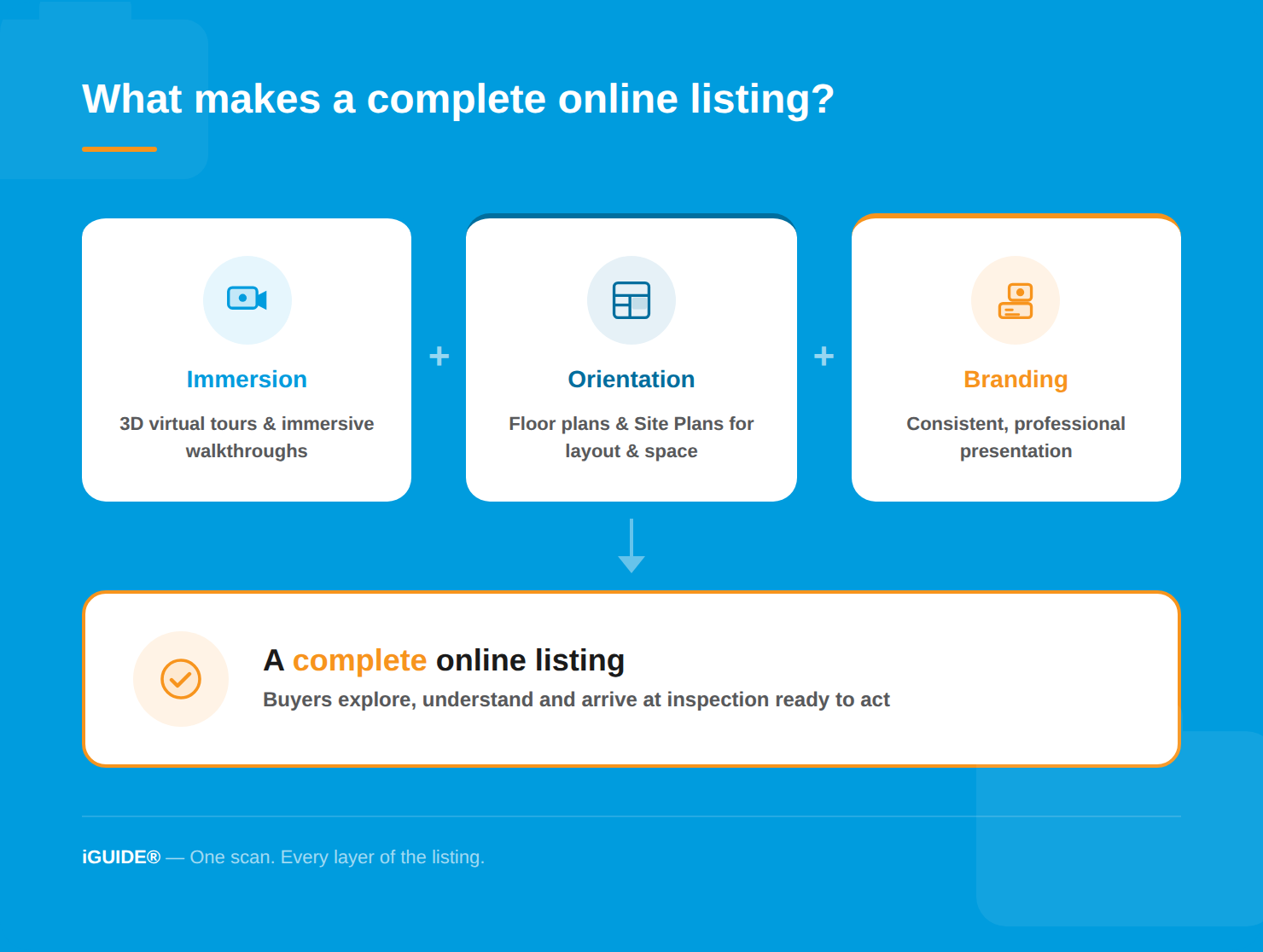
The most reliable listings don’t rely on a single type of media. They combine multiple formats to give buyers a complete picture.
This often includes:
- immersive walkthroughs that show how a home flows
- floor plans that explain layout and room relationships
- standardized measurements that provide consistency
- complete property documentation that ties everything together
Together, these elements shift listing media from marketing assets to decision-making tools.
"Buyers now expect layers of credible information—floor plans, accurate measurements, immersive walkthroughs—to back up what they see." Nathan Cool, Owner, Nathan Cool Photo Real Estate Media Outlook 2026
iGUIDE's Real Estate Media Outlook 2026 brings together insights from photographers and media professionals across North America on how AI, accuracy and buyer trust are reshaping property marketing. For a closer look at how the industry is navigating these shifts, read the full report.
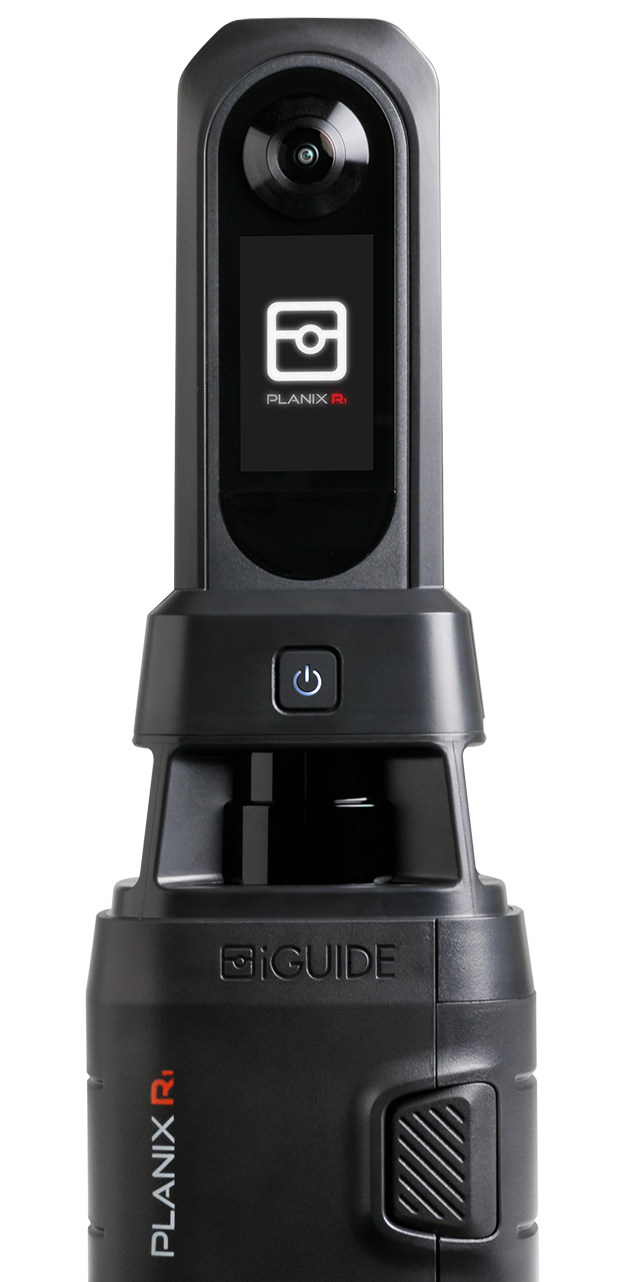
Platforms like iGUIDE follow this approach by capturing a property once and producing multiple outputs that reflect the space accurately helping buyers understand what they’re seeing and helping agents present listings with more credibility.
Author

Chris White
Product Marketing Manager
Chris is the Product Marketing Manager at Planitar of iGUIDE, leading technology for floor planning and space documentation. With a deep understanding of real estate, architecture, and insurance industries, Chris specializes in showcasing how iGUIDE’s tools enhance decision making across the entire property lifecycle. Chris' two passions are spending time with his family and talking endlessly about anything.
Check out more from iGUIDE

The art of emotional property selling: 5 things to know
Creating an emotional connection between a home buyer and a property can reap many benefits. Discover how to spark instant “I belong here” moments for home buyers by blending immersive visuals with accurate, trustworthy property data to turn interest into commitment.

Selling with the seasons: Storytelling strategies to help realtors move listings faster
Great listings are everywhere—but the ones buyers remember are the ones with a story. By weaving seasonal moments into your real estate marketing, you can turn any property into an experience people can’t help but share, engage with and act on.

Escape the dollhouse: choose virtual tours built for the real world
Not all virtual tours are created equal. Dollhouse-style 3D views deliver flash, but professionals need precision, clarity and real-world usability. Discover why floor plan–based tours give you the data and navigation that matter.