What is a real estate virtual tour?
A real estate virtual tour is an interactive digital walkthrough of a property that allows buyers to explore the space remotely.
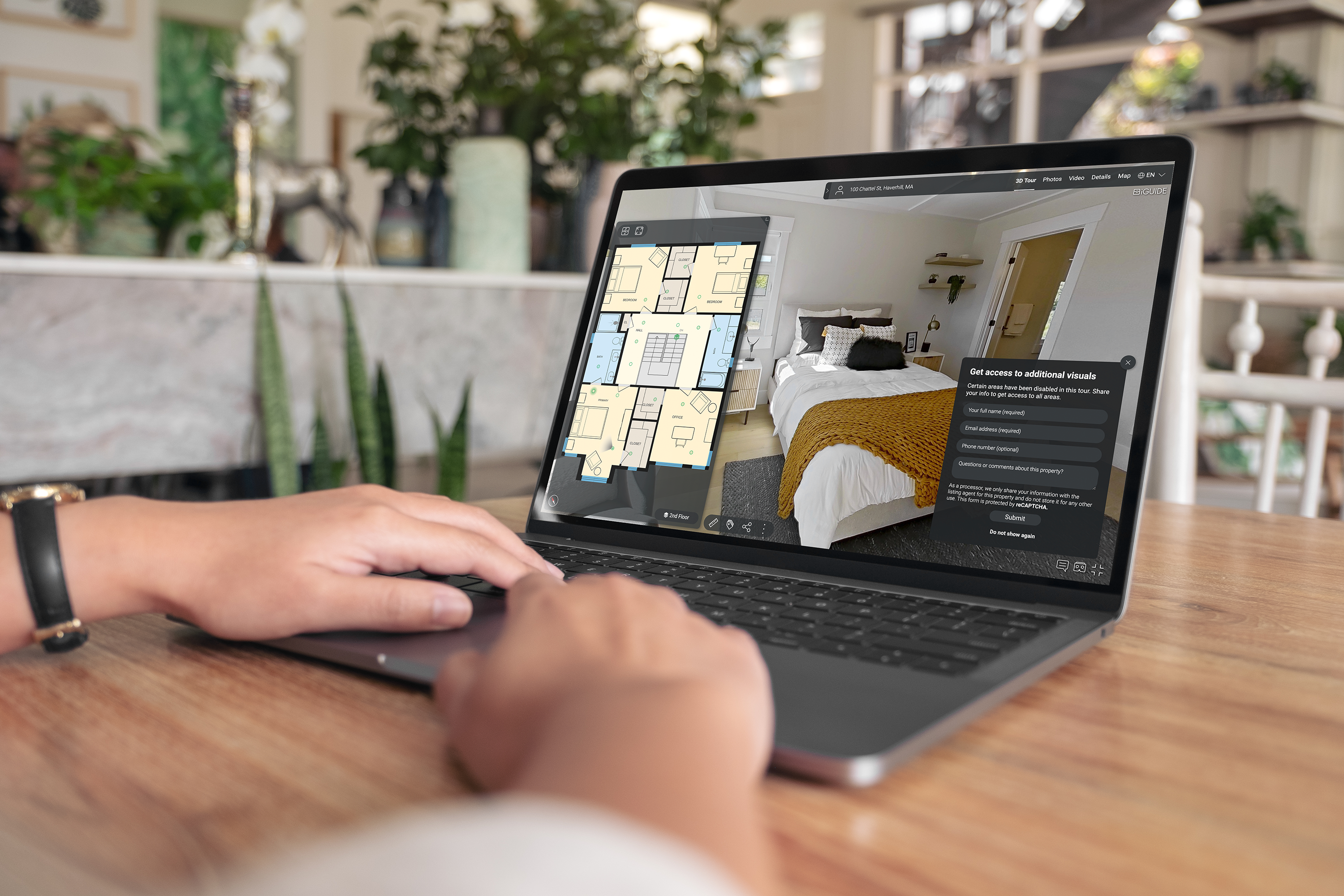
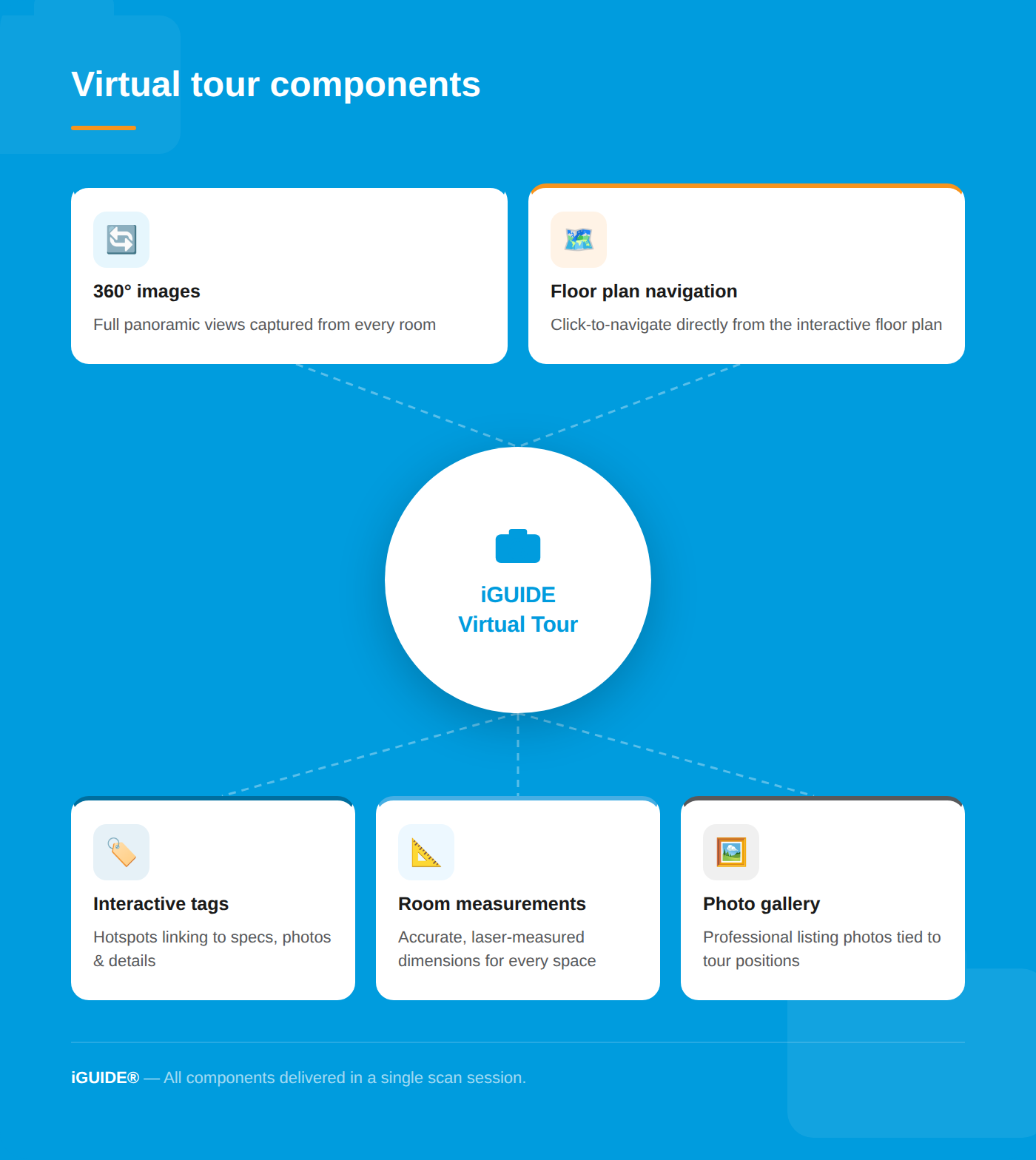
Unlike traditional listing photos, a virtual tour lets viewers move through the home room by room, often using 360-degree panoramic images. Many tours also include floor plans, measurements, and information tags that help buyers understand how the property is laid out.
Instead of imagining how rooms connect based on photos, buyers can explore the property in a way that feels closer to an in-person showing.
For agents and sellers, this creates a more engaging listing experience while helping buyers quickly understand whether a property fits their needs.
Benefits of virtual tours for buyers, sellers, and agents
Virtual tours make property listings easier to understand and explore. They also streamline parts of the buying and selling process.
For buyers
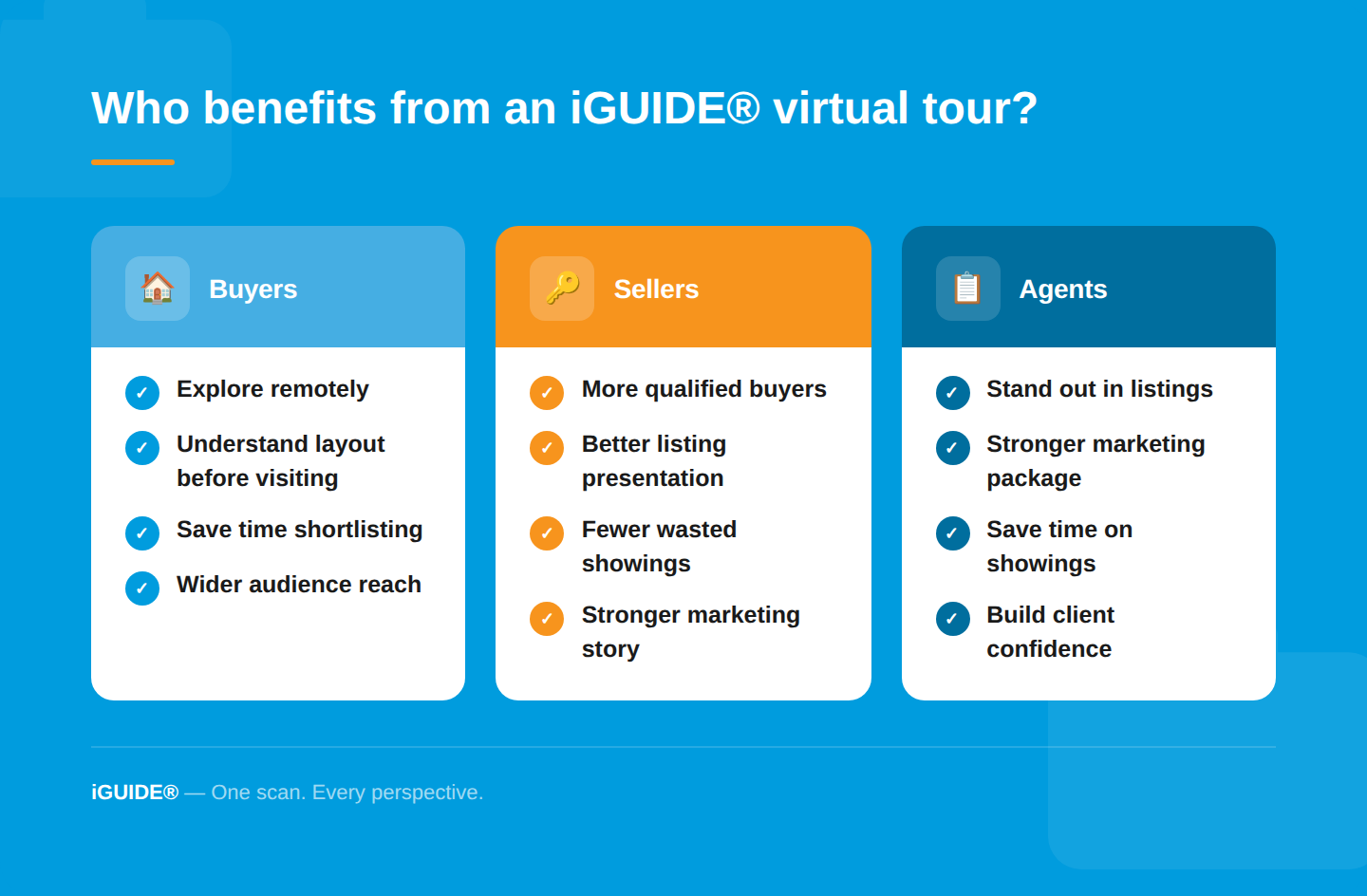
Buyers can explore properties anytime from anywhere. Virtual tours allow them to:
- understand the layout and flow of the home
- revisit rooms while comparing listings
- narrow down which properties they want to see in person
This helps buyers spend more time evaluating homes that truly fit their criteria.
For sellers
Virtual tours help listings reach a wider audience and attract more serious interest.
Because buyers can preview the property online, sellers often benefit from:
- more engaged buyers
- fewer unnecessary showings
- stronger listing presentation
Virtual tours also help properties stand out in crowded online marketplaces.
For agents
For real estate agents, virtual tours are both a marketing tool and a time-saving tool.
They allow agents to showcase listings more effectively while helping filter buyers who are genuinely interested in the property. Virtual tours can also generate additional listing engagement through interactive features such as floor plans and lead capture.
Explore a real example of a real estate virtual tour
Seeing a virtual tour in action helps illustrate how buyers interact with a listing online.
Explore the sample tour below to see how viewers can move through rooms, reference the floor plan, and understand how the home is organized before scheduling a showing.
What makes a virtual tour effective?
Not all virtual tours provide the same experience. The most effective tours focus on clarity, coverage, and usability.
High-quality imagery
Virtual tours rely on high-resolution panoramic images to create an immersive experience. Clear, well-lit images help viewers feel confident exploring the property.
Complete property coverage
An effective tour includes every key room and area of the home, giving viewers a complete understanding of the space.
Floor plan navigation
Many virtual tours include floor plan navigation so viewers can easily move between rooms and understand the layout of the property.
Interactive details
Additional elements such as information tags or room measurements provide context and help buyers understand important features of the home.
Easy navigation
The best tours are intuitive and simple to use, allowing viewers to move through the property naturally.
Best practices for showcasing listings with virtual tours
To get the most value from a virtual tour, preparation and presentation matter.
Stage the home before capturing the tour
A clean, well-organized property helps ensure the tour presents the home in its best light.
Use natural lighting whenever possible
Bright, evenly lit spaces make the tour easier to explore and help rooms appear more inviting.
Highlight key features
Interactive tags can be used to draw attention to important elements such as upgraded appliances, custom finishes, or outdoor spaces.
Provide full property context
Including exterior views and surrounding areas can help buyers understand the full setting of the home.
Why virtual tours are becoming standard in real estate listings
Today’s buyers begin their search online, often reviewing multiple listings before scheduling a showing. Virtual tours help bridge the gap between online browsing and in-person visits by giving buyers a clearer understanding of the property early in the process.
For agents and sellers, this means listings that are easier to explore, easier to understand, and more likely to attract serious interest.
Want to see how virtual tours fit into a modern real estate marketing package? Explore how iGUIDE supports residential real estate listings.